Author Archives: Myung Soo Cha

Unknown's avatar

About Myung Soo Cha

Professor School of Economics and Finance Yeungnam University South Korea

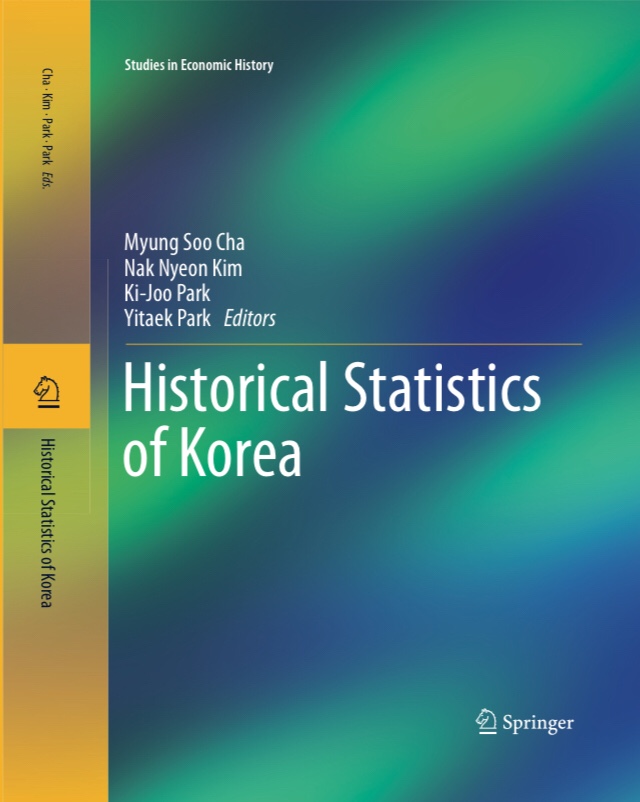
Preface to Historical Statistics of Korea


South Korea presents an unusual episode of effective escape from hunger and oppression. Having remained one of the poorest countries of the world until as recently as 1960, according to the International Monetary Fund, the country stood in 2019 roughly on a par with Britain in terms of purchasing power parity adjusted per capita output. Having long suffered oppression under various forms of nondemocracy until the late 1980s, South Koreans today bask in political freedom and civil liberty, which led the Economist to publish in 2017 a list of twenty top democracies including South Korea, but excluding the United States. The growth miracle and democratic revolution deserve attention from lay persons and academics around the world, because they potentially provide insights for people striving to raise living standards and to break themselves loose from the shackles of tyranny.


Historical Statistics of Korea provides historical and quantitative perspectives for the two remarkable transitions South Korea achieved. Rather than simply bringing together available data generated under the pre-colonial, colonial, post-colonial regimes, we focused on establishing coherence among distinct sets of data produced using different technologies to meet a variety of purposes. The inconsistency issue presents a challenge for those trying to make sense of the amazing story of success, because it can frustrate efforts to take advantage of the regime shifts occurring in modern Korea as natural experiments. As we hope, Historical Statistics of Korea helps economists, political scientists, and sociologists identify the deep, as opposed to proximate, forces driving the escape to freedom and prosperity and clarify the path dependent nature of the development.

Historical Statistics of Korea embodies the outcome of the two decades of research by 22 economists and economic historians associated with the Naksungdae Institute of Economic Research, a private sector and non-profit organization established by Byung Jick Ahn and Daekeun Lee in 1987. Composing this preface, we fondly recall how our research program has been inspired by late Toshiyuki Mizoguchi leading the project to estimate the national accounts of colonial territories of pre-1945 Japan at the Institute of Economic Research, Hitotsubashi University. The Historical Statistics of Korea program also benefited from being associated with the Center of Excellence project the institution has carried out under the leadership of Konosuke Odaka and Osamu Saito. We thank Tetsuji Okazaki for gladly accepting our work for publication as a part of Springer Studies in Economic History. Last, but not least, we are grateful to the South Korean taxpayers for generously supporting us through a series of research grants during the last two decades, including the most recent one, AKS-2014-KFR-123001. Hopefully, they will find in this volume their favor has been properly reciprocated.


Myung Soo Cha
Nak Nyeon Kim
Ki-Joo Park
Yitaek Park
Did Confucianism Check or Help Growth?

Click here for paper download.

Confucianism had been considered as anti-growth until the East Asian growth miracle occurred. This paper constructs and analyzes a county level dataset for China to find that the growth consequence of the doctrine differed under different political orders. Ordinary least squares and instrumental variable regressions agree in showing that Confucianism promoted per capita output growth in Maoist China, but not in the preceding or following regimes. Evidence indicates that the doctrine promoted human and physical capital accumulation, but impeded innovation. Confucianism appears as incompatible with sustained growth, which needs to be driven not by accumulation, but by technological progress.

JEL classification: N15, N35, O11, O15, O53

Key words: China; Confucianism; development; growth

Historical Statistics of Korea: Abstract

edited by Myung Soo Cha, Nak Nyeon Kim, Kijoo Park, and Yitaek Park

forthcoming from Springer Publishing

This book presents economic statistics of Korea in the past three centuries, focusing on the century following 1910. The data, typically time series, rather than cross-sectional, are given in 22 chapters, which refer to population, wages, prices, education, health, national income and wealth, and technology, among others. Rather than simply putting together available data, the contributors to this statistical compendium made adjustments to ensure consistency when required. An overview draws attention to discontinuous shifts occurring over time in the quantity and quantity of the statistical information available, which was associated with the regime changes Korea underwent including the imposition of Japanese rule in 1910 and de-colonization and split into two Koreas three and half decades later. Individual chapters begin with a brief introduction, which helps users better understand and use data. Data sources and references in the Japanese and Korean language are fully provided following the standard Helpburn and McCune-Reischauer Romanization with English translation to assist users identify materials and explore deeper into the wealth of statistical data waiting to be analyzed.


Table of Contents

Historical Statistics of Korea: Table of Contents

edited by

Myung Soo Cha, Nak Nyeon Kim, Kijoo Park, and Yitaek Park

Forthcoming from Springer Publishing


Table of Contents

A. Environment and Geography

B. Population

C. Labor Force and Employment

D. Wages

E. Education

F. Health

G. Agriculure

H. Natural Resources

I. Construction and Housing

J. Manufacturing

K. Distribution

L. Transportation and Communication

M. Service Industry and Public Utilities

N. National Income

O. Prices

P. Capital and Wealth

Q. Science and Technology

R. Business Organization

S. Monetary and Financial System

T. Public Sector

U. Law and Order

V. International Trade and Exchange Rates

The Consequences of the Post-Colonial Land Redistribution for the Democratic Transition in South Korea


work in progress


Land inequality tends to be viewed as inimical to democratic outcomes, either because it is usually associated with unequal distribution of social power, or because the immobility and specificity of landed assets imply landowners losing more from higher taxation under democracy than the owners of human and physical capital. The release from Japanese rule in 1945 triggered massive land redistribution in South Korea, which culminated in the legislation of the Land Reform Law three years later. This paper analyzes county-level outcome of the presidential elections to show that the post-colonial land redistribution promoted democratic transition by weakening social inequality, rather than by reducing the concentration of landownership.

Do Contraceptives Cause Fertility Transition? Evidence from Korea

Available from SSRN

As the total fertility rate fell from 6.0 to 1.6 from 1960-90, the South Korean government implemented a family planning program focusing on the distribution of contraceptives. While the concurrence has been interpreted as evidence of the public provision of fertility control devices lowering fertility, the causal link has yet to be established controlling for the covariates of fertility. Constructing and analyzing panel data sets, this paper finds that the fertility transition was driven predominantly by per capita output growth, with vasectomy, together with financial development, rising population density, and the public provision of secondary schooling, playing supporting roles.

Bad and Good Inequality in the Advance of the Korean Literacy

Available from SSRN

This paper identifies two distinct types of inequality affecting the advance of the Korean literacy in opposite ways. Literacy improvement in colonial Korea was checked by the presence of landed elite with pre-colonial origin, but helped by the development of profit-seeking land tenancy associated with contractual formalization. Abolishing both the aristocratic and market-oriented landlordism, the post-colonial land redistribution accelerated the advance of literacy by destroying the structural inequality, rather than by reducing the market inequality. It is thus important for policymakers to identify the nature of inequality they face before embarking on redistribution.